I’ll be honest — the first time I walked into a fully automated supermarket, I stood at the entrance for a full minute just looking around. No checkout lines. No cashiers. Just sensors, screens, and a weirdly peaceful hum. That moment got me thinking: what is a supermarket in 2026, really?
The short answer? It’s nothing like what your parents grew up with. The modern supermarket has transformed from a simple grocery store into a smart, tech-driven retail ecosystem. Whether you’re a curious shopper, a retail pro, or someone just trying to figure out why your local store suddenly looks like a sci-fi movie set — this guide’s got you covered.
What Is a Supermarket, Exactly?
A supermarket is a large self-service retail store that sells food, beverages, household goods, and personal care items — all under one roof. It’s bigger than a convenience store but typically smaller than a hypermarket.
But here’s the thing: in 2026, that definition barely scratches the surface.
Today’s supermarkets are blending physical shopping with digital tools, AI-driven personalization, and sustainability practices that would’ve seemed futuristic just five years ago. It’s not just about buying bread anymore. It’s about an entire retail experience.
A Brief History: From Corner Shop to Smart Store
How Supermarkets Started
The first true self-service grocery store opened in the early 1900s in the United States. Before that, you’d walk up to a counter and ask a shopkeeper to grab items for you — one by one. Slow, right?
By the 1950s and 60s, supermarkets had spread across the US and Europe. Shopping carts, wide aisles, and neon price tags became the norm. It was revolutionary at the time.
The Digital Transformation
Fast forward to the 2010s, and online grocery shopping started shaking things up. Then the pandemic hit in 2020, and everything accelerated overnight. Contactless payment, curbside pickup, and delivery apps became standard almost instantly.
By 2026, we’re in a completely different era. I like to call it the “phygital” age of retail — part physical, part digital, entirely connected.
What Does a Modern Supermarket Look Like in 2026?
If you haven’t been to a major supermarket recently, you might be surprised by what you find. Here’s what’s changed.
Cashierless Checkout Technology
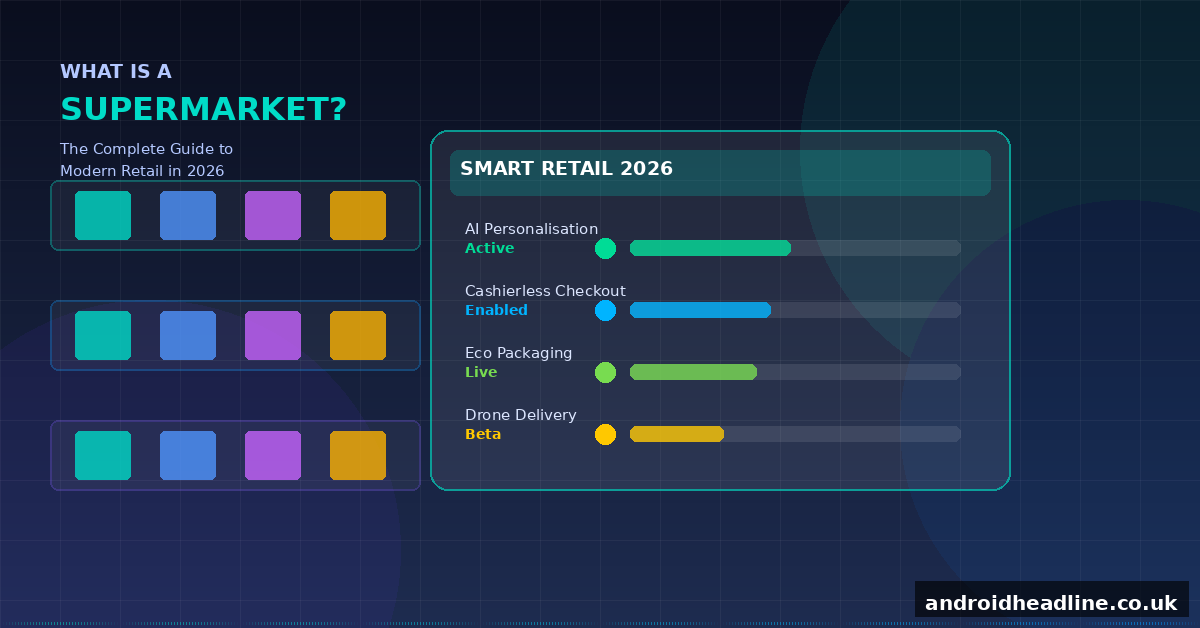
Many supermarkets now use computer vision and weight sensors to automatically track what you pick up. You walk in, grab what you need, and walk out. The app charges you automatically. Amazon Fresh pioneered this with “Just Walk Out” tech, and now dozens of chains have adopted similar systems.
I tried one of these stores last spring, and honestly? I felt a little like I was shoplifting the first time. Turns out, the cameras just… know.
AI-Powered Personalization
Modern supermarket apps learn your buying habits and suggest deals based on what you usually buy. If you pick up almond milk every two weeks, your app will remind you before you run out — and probably offer you a discount too.
This isn’t just clever marketing. It genuinely saves people time and money, which is hard to argue with.
Sustainable and Eco-Friendly Practices
Supermarkets in 2026 are under real pressure to go green. Many now offer:
- Packaging-free or reduced-plastic product zones
- In-store composting and food waste programs
- Renewable energy-powered store operations
- Local produce sourcing to cut carbon footprints
Some chains have even introduced “ugly produce” sections — discounted fruits and veggies that aren’t perfect-looking but taste just as good. I buy from these every time. No shame in a lumpy tomato.
Types of Supermarkets You’ll Encounter
Not all supermarkets are the same. Here’s a quick breakdown of the main types you’ll see in 2026:
1. Traditional Supermarkets
Your standard full-service grocery store. Think Tesco, Walmart Grocery, or Kroger. Wide selection, competitive prices, and now often paired with an app or loyalty program.
2. Discount Supermarkets
Chains like Aldi and Lidl focus on lower prices through fewer brands and leaner operations. They’re booming — more shoppers are price-conscious than ever.
3. Premium and Specialty Supermarkets
Stores like Whole Foods or Waitrose cater to health-conscious shoppers willing to pay more for organic, artisan, or specialty products.
4. Online-First Supermarkets
Some retailers operate almost entirely online, with dark stores (warehouses designed for picking orders, not shopping) fulfilling home deliveries within hours.
5. Micro-Format Convenience Stores
Smaller, tech-enabled stores popping up in city centers, hospitals, and office buildings. Think of them as supermarket lite — quick, smart, and surprisingly well-stocked.
How to Shop Smarter at a Modern Supermarket
Want to get the most out of your supermarket trips in 2026? Here are some practical tips I actually use:
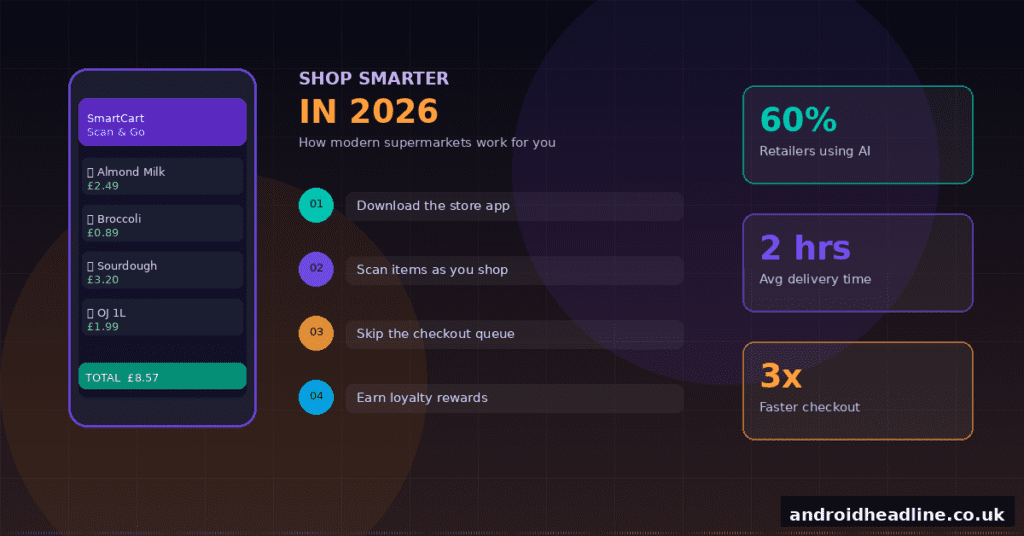
- Download the store app. Most chains offer exclusive app-only deals and digital coupons. You’re leaving money on the table if you’re not using them.
- Check the weekly digital flyer. Promotions rotate fast. A quick scroll before your trip can save you real cash.
- Use the scan-and-go feature. Many stores let you scan items as you shop so there’s zero wait at checkout.
- Sign up for the loyalty program. Points, cashback, personalized discounts — it adds up.
- Shop the store brand. Private label products have come a long way in quality and they’re almost always cheaper.
- Check expiry dates on deals. Flash sales and markdown items are great, but make sure you’ll actually use them in time.
The Future of Supermarkets: What’s Coming Next?
The retail world isn’t slowing down. Here’s what I think we’ll see more of in the next couple of years:
Drone and Robot Delivery
Some supermarkets are already trialing last-mile delivery via drones and autonomous robots in select cities. It sounds gimmicky, but the economics are starting to make sense for high-density urban areas.
Hyper-Local Sourcing
Expect more supermarkets to partner with local farms and producers. Shoppers want to know where their food comes from, and chains are responding.
Augmented Reality Shopping
Imagine pointing your phone at a shelf and instantly seeing nutritional info, reviews, and recipe ideas for any product. This tech exists today — it’s just not widespread yet.
According to a 2025 report by McKinsey & Company, over 60% of grocery retailers globally are actively investing in AI and digital tools to enhance in-store and online shopping experiences. That number will only climb.
Is the Supermarket Model Under Threat?
I get asked this a lot. With online shopping so convenient, are physical supermarkets dying?
Honestly? No. And here’s why: people still want to shop in person. There’s something about picking your own fruit, smelling fresh bread, and grabbing something on impulse that no algorithm can fully replicate.
What’s changing is the role of the physical store. It’s becoming more experiential — a place that combines convenience with community. Many supermarkets now host cooking classes, tasting events, and even café spaces.
Final Thoughts
So, what is a supermarket in 2026? It’s a smart, sustainable, tech-enabled shopping hub that’s more responsive to your needs than ever before. It’s also still the place where you’ll forget to grab milk after doing a full shop. Some things never change.
Whether you’re a tech-curious shopper or just trying to make grocery runs less painful, understanding how modern supermarkets work helps you shop smarter, save more, and waste less.