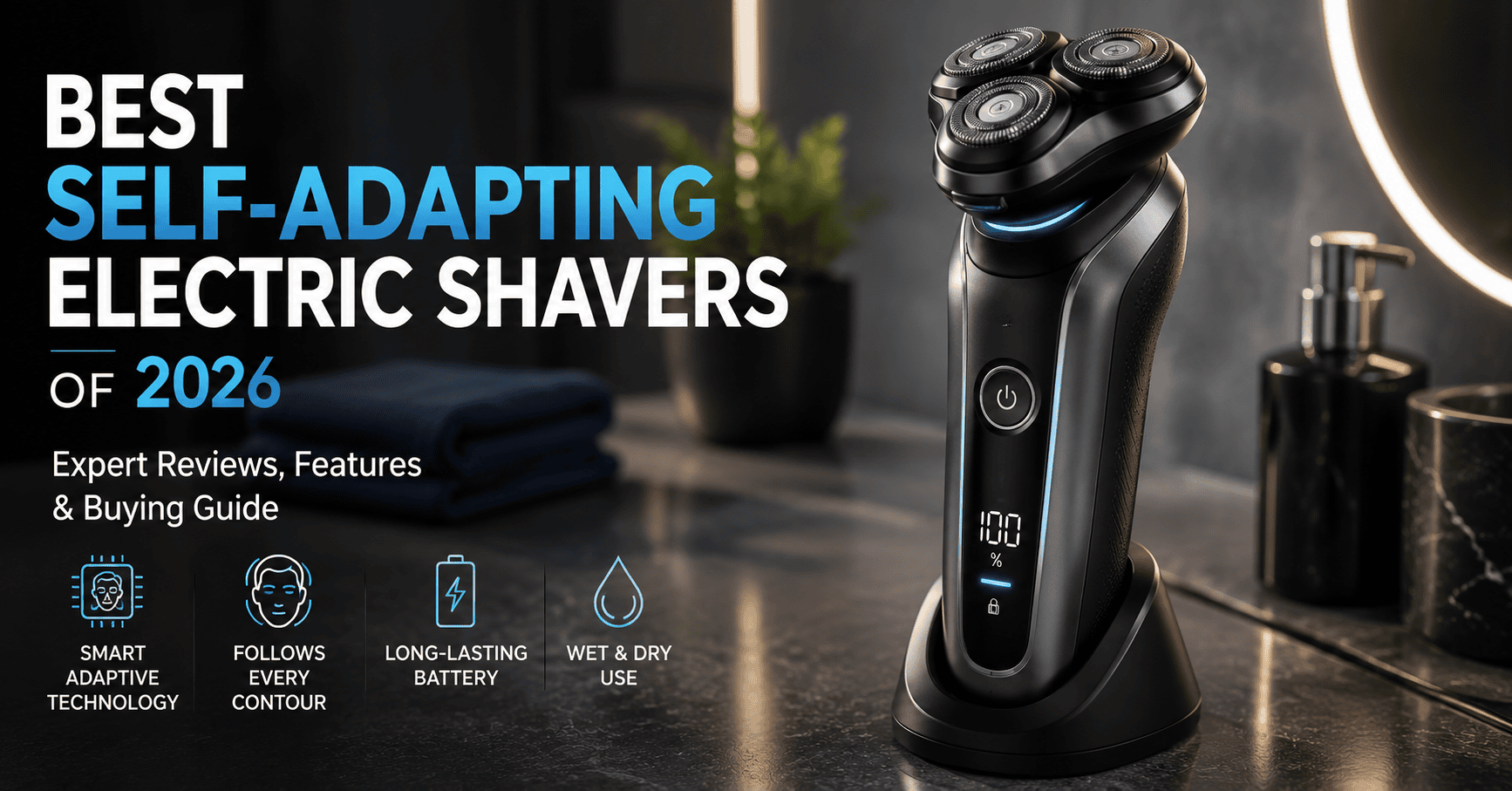
Razor burn, missed patches, and that annoying tug on thick spots. Sound familiar? I dealt with that for years before I even knew self-adapting shavers were a thing.
A self-adapting electric shaver reads your face as you go. It adjusts power and blade angle in real time, so it handles thick jaw hair and soft neck hair without you having to slow down or go over the same spot five times.
In 2026, this tech has gotten a lot smarter and a lot more affordable. But not every “self-adapting” shaver on the shelf actually delivers on that promise. Some are just regular shavers with a fancy name slapped on the box.
In this guide, I’ll break down what self-adapting tech really means, the features worth paying for, and exactly how to pick one that won’t leave your face irritated. Let’s get into it.
What Is a Self-Adapting Electric Shaver?
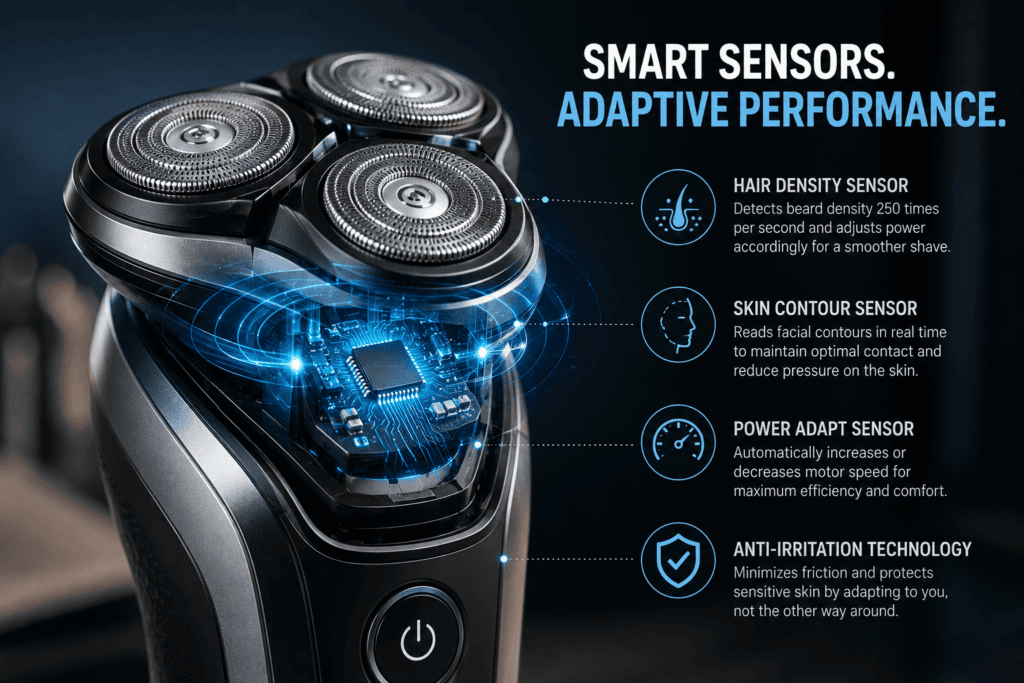
A self-adapting electric shaver uses built-in sensors to detect hair density and skin contour as you shave. It then adjusts motor speed and blade pressure automatically.
Basically, it’s a shaver that reacts to your face instead of applying the same setting everywhere. Thicker areas like the jawline get more power. Softer areas like the neck get a gentler pass.
Older electric shavers just ran at one fixed speed the whole time. That’s part of why they left some spots under-shaved and others irritated. Self-adapting models fix that by constantly reading and reacting.
Why This Technology Is Taking Over in 2026
Men are shaving less often but expecting better results per shave. That shift in habits is pushing brands to focus on precision instead of just raw power.
There’s also a bigger conversation around skin health. The American Academy of Dermatology notes that reducing friction and repeated passes over the same skin area helps limit irritation and ingrown hairs, which is exactly what adaptive tech is designed to do.
Here’s what’s fueling the shift toward self-adapting models:
- Rising awareness around skin sensitivity and razor burn
- Better micro-sensor technology that’s now cheap enough for everyday shavers
- Longer battery life making cordless models more practical
- App-connected shavers that track usage and suggest replacement schedules
- More men shaving styled facial hair, which needs precision, not just speed
Key Features That Actually Matter
Not every spec on the box is worth your money. Here’s what’s actually worth paying attention to.
Adaptive Sensor Response Time
This is the core of the technology. Faster sensor response means the shaver adjusts power almost instantly as it moves across your face.
Cheaper models sample your skin every second or so, which feels laggy. Better ones adjust nearly in real time, so you don’t feel a delay when moving from cheek to jaw.
Skin Contour Tracking Heads
Flexible shaving heads that pivot in multiple directions follow your jawline and neck curves better than rigid ones. This matters more than people expect, especially if you have a defined jawline or a scar.
Battery Life & Charging Speed
Look for at least 45-60 minutes of runtime on a full charge. A lot of newer models also offer a quick five-minute charge that gets you through one shave in a pinch.
Wet & Dry Use
If you like shaving in the shower or with gel, make sure the model is fully waterproof, not just splash-resistant. Check the IPX rating on the box.
App Connectivity & Skin Tracking
Some premium models pair with an app that tracks your shaving pattern and flags when your blades need replacing. It’s a nice-to-have, not a must-have, but it does help you stay on top of maintenance.
Foil vs Rotary: Which Self-Adapting Style Wins?
This debate has been going on for years, and honestly, it comes down to your hair type and skin sensitivity.
Foil shavers use thin, straight blades under a metal mesh. They tend to give a closer, more precise shave and work great for straight hair growth patterns.
Rotary shavers use spinning circular heads that pivot to follow your face’s curves. They’re generally better for coarse or curly hair and can be more forgiving on sensitive skin.
Self-adapting tech now shows up in both styles, so the “which is better” question really depends on your face, not the sensor tech itself.
Comparison Table: Shaver Types at a Glance
| Feature | Self-Adapting Foil | Self-Adapting Rotary | Standard Fixed-Speed Shaver |
|---|---|---|---|
| Closeness of shave | Very close | Close, slightly less precise | Moderate |
| Best hair type | Straight, fine hair | Coarse, curly hair | Any, but less precise |
| Sensitivity handling | Good | Excellent | Fair |
| Price range | $ | ||
| Learning curve | Low | Low | Very low |
| Smart tech options | Common in 2026 models | Common in 2026 models | Rare |
How to Choose the Right Self-Adapting Electric Shaver
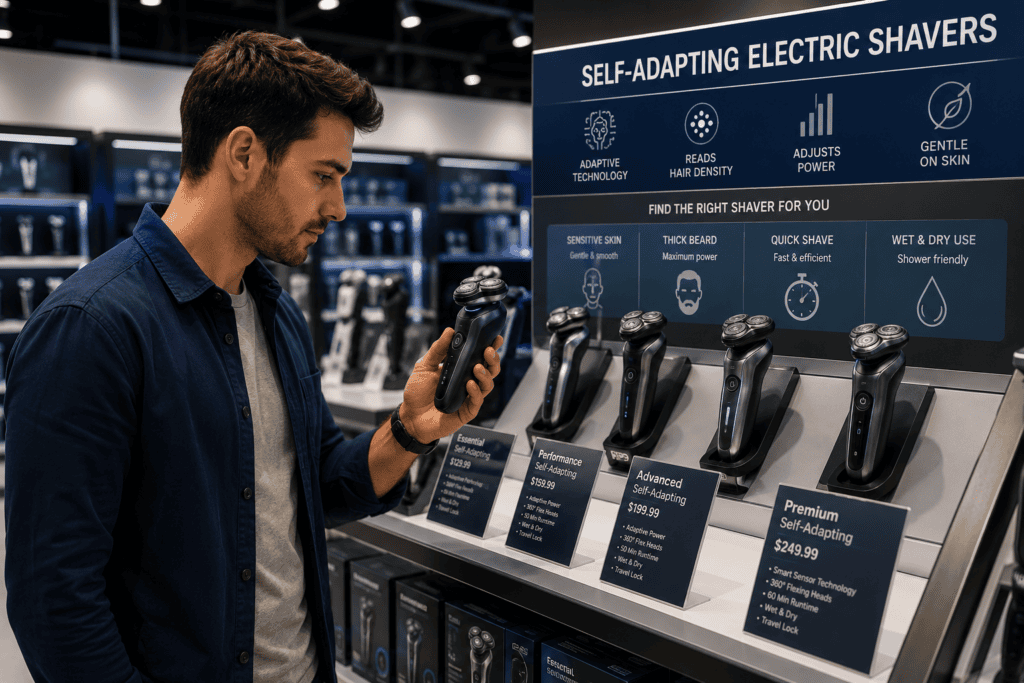
Picking the right one isn’t about grabbing the most expensive box. Here’s what to actually check.
Match It to Your Skin Type
If you have sensitive skin or deal with razor bumps, prioritize models with gentler adaptive settings and hypoallergenic blade coatings.
Check the Warranty and Blade Replacement Cost
A shaver that’s cheap upfront but needs $40 replacement heads every few months isn’t actually saving you money. Always check replacement part pricing before buying.
Consider Your Shaving Frequency
Daily shavers should prioritize battery life and quick charging. Weekly shavers can get away with a smaller battery but should focus on handling longer, thicker growth well.
Think About Travel Needs
If you travel often, look for models with a travel lock feature and dual-voltage charging, so you’re not stuck fumbling with adapters.
Set a Realistic Budget
Here’s a rough 2026 pricing breakdown:
- Budget tier ($40-$80): Basic adaptive sensors, shorter battery life, fewer settings
- Mid tier ($90-$160): Reliable adaptive response, solid battery life, wet/dry use
- Premium tier ($170+): Fastest sensor response, app connectivity, longest warranties
According to Consumer Reports, higher price doesn’t always mean better performance, so it’s worth comparing real test results instead of just trusting the price tag.
Step-by-Step: Testing a Shaver Before You Commit
If you can test one in-store or during a return window, don’t skip this.
- Check the weight and grip. A shaver that feels too light or too heavy affects control.
- Turn it on and listen. Excess vibration or loud motor noise can be a sign of lower build quality.
- Run it dry against your palm. You’ll feel if the adaptive response feels smooth or jerky.
- Test the flex on the head. Press it against different angles to see how well it pivots.
- Check charging time claims. Time an actual charge if possible instead of trusting the box.
- Try it wet if you can. Wet performance can feel very different from dry performance.
- Review the return policy. A 30-day trial period lets you actually test it on real stubble.
Common Mistakes to Avoid When Buying
I’ve made a couple of these mistakes myself, so save yourself the trouble.
- Buying based on brand name alone. Some lesser-known brands use similar sensor tech at a lower price.
- Ignoring blade replacement costs. This adds up fast over a year of ownership.
- Skipping the IPX water rating check. Not all “waterproof” shavers can handle a full shower.
- Assuming rotary is always gentler. It depends on the specific model’s blade sharpness and adaptive tuning.
- Not checking sensor response speed. A laggy adaptive shaver barely outperforms a standard one.
- Overlooking travel lock features. A shaver turning on inside your bag is a common, annoying mistake.
Expert Tips for a Better, Closer Shave

- Shave right after a warm shower when your skin and hair are softer.
- Go with the grain first, then against it only if you want an extra-close finish.
- Clean the shaving head after every use to keep sensors and blades working properly.
- Replace blades every 12-18 months, even if they still seem sharp.
- Use a pre-shave gel or balm if you have sensitive skin, even with adaptive tech.
My Honest Experience Switching to One
I was skeptical the first time I tried a self-adapting shaver. It felt like another gimmick marketing term, honestly.
But after about a week, I noticed something real. My jawline, which always got the roughest treatment before, stopped feeling raw by the end of the shave.
It’s a small thing, but it made shaving feel less like a chore and more like a two-minute part of my morning I don’t dread anymore.
Maintenance Tips to Extend the Life of Your Shaver
- Rinse the head under warm water after every shave, or use the cleaning station if included
- Oil the blades every few weeks if your model isn’t self-lubricating
- Store it in a dry spot, not a steamy bathroom cabinet
- Avoid dropping it, since sensor calibration can shift after impact
- Replace foils or rotary heads on schedule, not just when they visibly dull
Key Takeaways
- Self-adapting electric shavers adjust power and pressure automatically based on hair density and skin contour.
- Foil models suit fine, straight hair, while rotary models handle coarse or curly hair better.
- Sensor response speed and head flexibility matter more than flashy marketing terms.
- Always factor in blade replacement costs before deciding on a budget.
- Regular cleaning and timely blade replacement keep performance and skin comfort consistent.
Conclusion
A self-adapting electric shaver isn’t just a trend; it’s a real upgrade if razor burn and uneven shaves have been part of your routine. Choosing the best self-adapting electric shaver in 2026 comes down to matching the tech to your skin type, hair pattern, and budget, not just picking the shiniest box on the shelf.
Take the time to check sensor response, replacement costs, and warranty terms before you buy. Your face will thank you.
Have a shaver you swear by, or one that let you down? Drop a comment below and share your experience. And if this guide helped you narrow things down, share it with a friend who’s still fighting with razor burn every morning.
FAQs
1. What makes a shaver “self-adapting”? It uses built-in sensors to detect hair density and skin contour, adjusting power and blade pressure automatically as you shave.
2. Is a self-adapting shaver better than a regular electric shaver? For most people, yes, especially if you have uneven hair growth or sensitive skin, since it reduces repeated passes over the same area.
3. How long does the battery last on these shavers? Most 2026 models offer 45-60 minutes of runtime, with many including a quick five-minute charge option.
4. Are self-adapting shavers safe for sensitive skin? Generally yes, since the adaptive tech reduces excess pressure, but always check for hypoallergenic blade coatings if you’re prone to irritation.
5. Foil or rotary: which is better for curly hair? Rotary shavers typically handle coarse or curly hair better due to their pivoting heads.
6. How often should I replace the blades? Most manufacturers recommend replacing blades or heads every 12-18 months for consistent performance.
7. Can I use a self-adapting shaver in the shower? Only if it has a proper waterproof IPX rating, so always check the specs before wet use.
8. Are app-connected shavers worth the extra cost? They’re helpful for tracking blade wear and shaving habits, but not essential if you just want a solid, close shave.
MORE INFO VISIT: Androidheadline.co.uk