So you’re stuck between a car you’re tired of paying for and a bus schedule that never matches your life. I get it. That was me two years ago, sitting in traffic on a route that should’ve taken ten minutes.
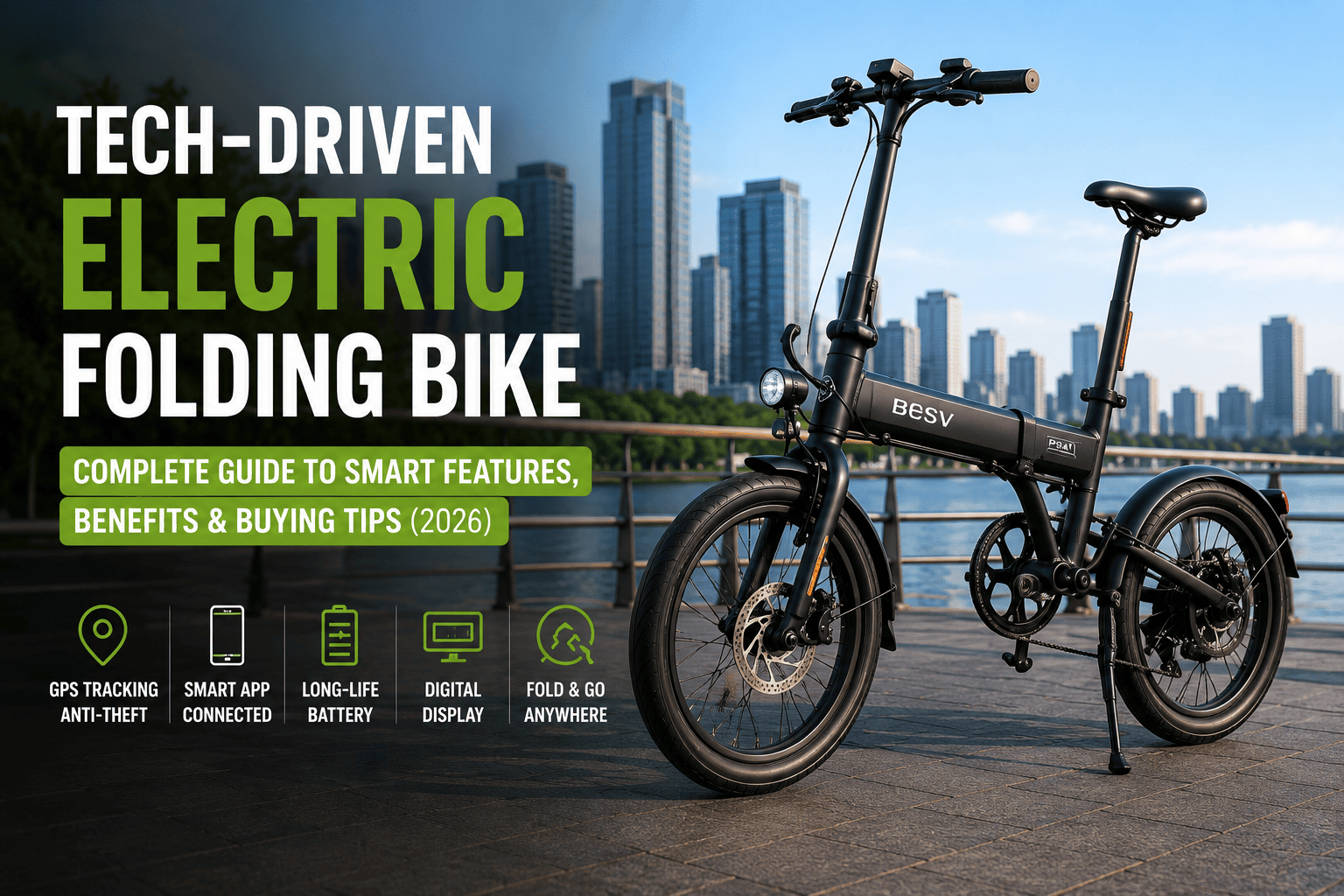
A tech-driven electric folding bike changed that for me, and honestly, it’s changing how a lot of us get around cities in 2026. These aren’t the clunky folding bikes your uncle had in the garage. They come with GPS tracking, phone apps, smart batteries, and motors that actually feel like magic on a hill.
But picking the right one isn’t simple. There are dozens of brands, confusing specs, and prices that swing wildly for what looks like the same bike. In this guide, I’ll walk you through the smart features that matter, the real benefits you’ll notice day to day, and the buying tips that’ll save you from a bad purchase. Let’s get into it.
What Is a Tech-Driven Electric Folding Bike?
A tech-driven electric folding bike is basically a regular folding bike with a motor, a battery, and built-in smart technology added on top.
Think of it as a normal e-bike that shrinks down to fit in your trunk, your closet, or under your office desk. The “tech-driven” part means it goes further than just pedal assist. We’re talking app connectivity, digital displays, theft alerts, and sometimes even self-diagnosing software.
I like to describe it as a bike that thinks a little. It knows your speed, tracks your battery health, and in some models, it can even tell you when a part needs servicing before it breaks. That’s a big shift from the folding bikes of ten years ago.
Why Electric Folding Bikes Are Booming in 2026
City living has gotten more expensive and more crowded. Parking is a nightmare in most places, and public transit isn’t always reliable.
That combination is pushing more people toward compact, electric transportation. According to the U.S. Department of Energy, electric bikes use a fraction of the energy that cars do per mile traveled, which makes them a genuinely cleaner option for short trips.
There’s also a lifestyle piece here. People want flexibility. You can ride to the train station, fold your bike, hop on, and unfold it again on the other side. Try doing that with a regular bicycle.
Here’s what’s driving the boom, in plain terms:
- Rising fuel and parking costs in major cities
- Better battery tech that lasts longer and charges faster
- Remote and hybrid work creating irregular commute patterns
- Growing interest in low-impact fitness and outdoor time
- Apps and smart features making bikes feel more like gadgets than tools
Smart Features You Should Actually Look For
Not every “smart” feature is worth paying extra for. Some are genuinely useful. Others are marketing fluff. Here’s how to tell the difference.
GPS & Anti-Theft Tracking
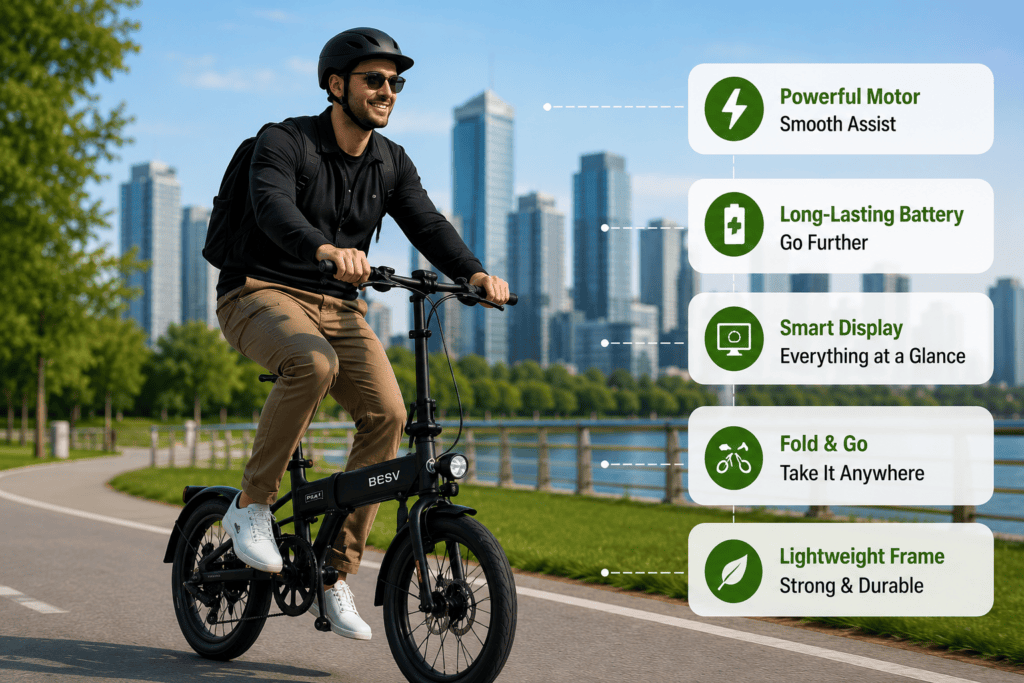
This one’s not optional in my book. A built-in GPS tracker means you can locate your bike if it’s stolen, and some models will even send an alert straight to your phone the second someone tries to move it without authorization.
I know someone who recovered their bike within an hour because of this exact feature. Without it, that bike would’ve been gone for good.
App Connectivity & Ride Data
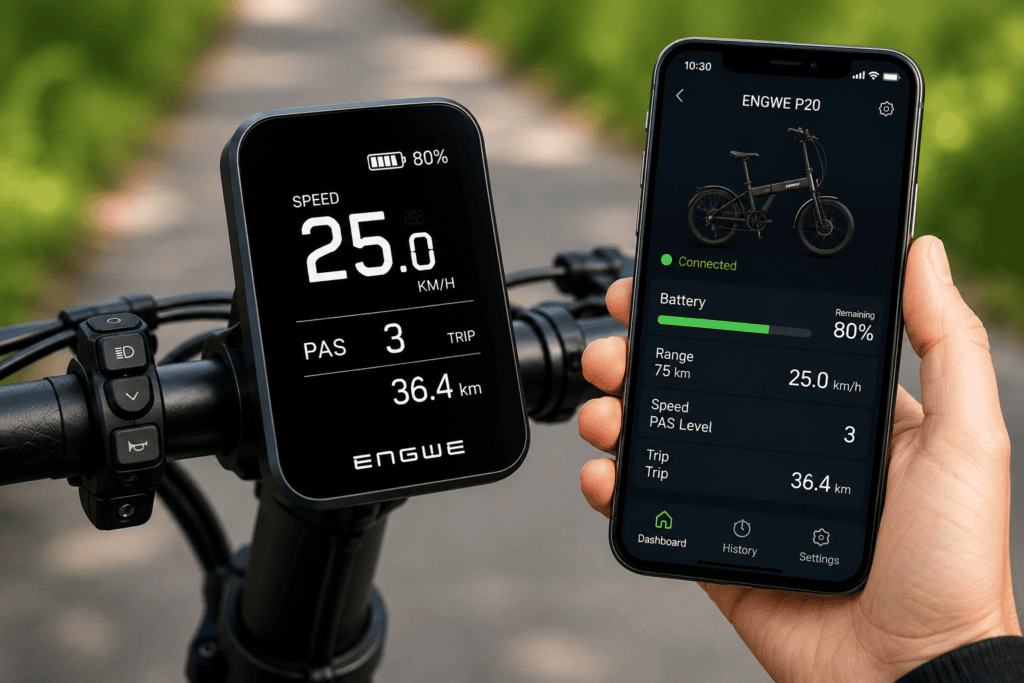
Most tech-driven models pair with a smartphone app. You get real-time stats like speed, distance, battery percentage, and sometimes route history.
This sounds like a gimmick until you’re trying to figure out if you’ll make it home on the remaining battery. Trust me, that data matters more than you’d think.
Smart Battery Management
Good electric folding bikes use software to protect the battery from overcharging and extreme temperature damage. This extends the life of the battery significantly.
Look for a bike with a battery management system, sometimes labeled as BMS. It’s a small detail that adds years to your battery’s usable life.
Regenerative Braking
Some higher-end models recover a bit of energy when you brake, feeding it back into the battery. It’s not a massive boost, but every bit helps on longer rides.
Automatic Gear Shifting
This feature adjusts gears for you based on your speed and pedaling effort. It’s especially handy for beginners who haven’t gotten the hang of manual shifting yet.
Key Benefits of Owning One
Let’s move past the specs and talk about what actually changes in your daily life.
Commuting Made Easy
You skip traffic, skip parking headaches, and you can combine it with public transit for longer trips. Fold it, carry it onto a train, unfold it, and keep going.
Health and Fitness Perks
Even with pedal assist, you’re still moving your body. The World Health Organization points out that regular physical activity, even in short bursts, lowers the risk of heart disease and improves mental health.
You control how much assist you use, so you can turn it into a solid workout or an easy cruise depending on your energy that day.
Eco-Friendly Transportation
Fewer car trips mean lower emissions. For short errands and commutes, an electric folding bike is one of the cleanest options out there.
Cost Savings Over Time
No gas, minimal maintenance, and no parking fees. Most owners recover the bike’s cost within a year or two, especially if they were driving or taking rideshares before.
Electric Folding Bike vs Regular E-Bike vs Traditional Bike
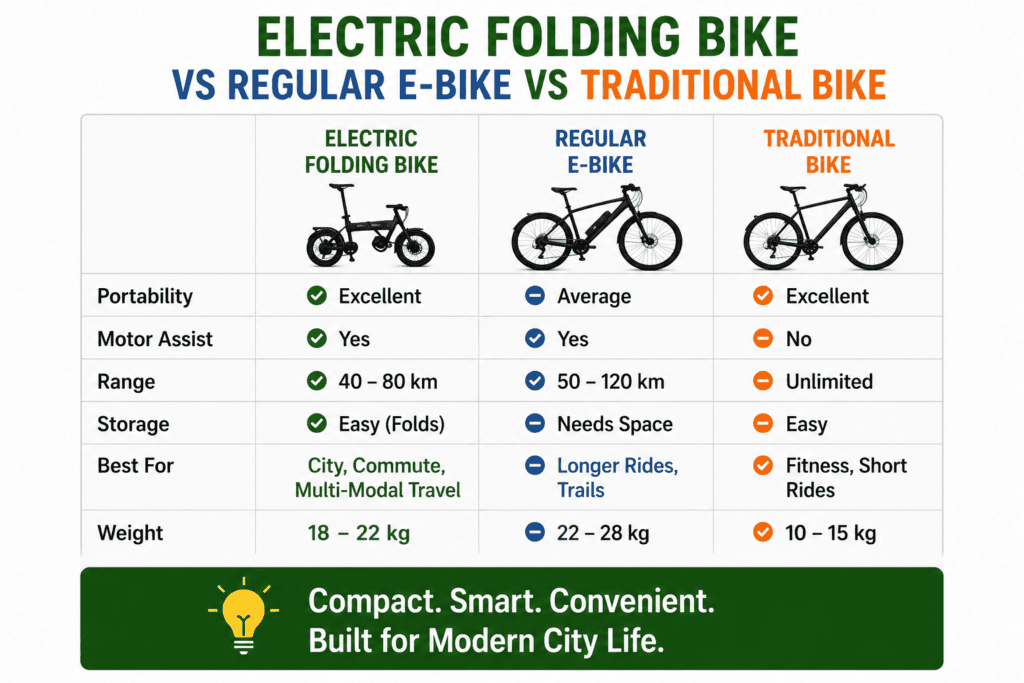
Here’s a quick side-by-side so you can see where the folding option actually wins and where it doesn’t.
| Feature | Electric Folding Bike | Regular E-Bike | Traditional Bike |
|---|---|---|---|
| Portability | Excellent (folds small) | Poor (full size) | Moderate |
| Storage | Fits closets, trunks, offices | Needs garage or bike rack | Needs garage or bike rack |
| Speed with assist | Moderate to fast | Fast | Rider-dependent only |
| Price range | $ | ||
| Best for | Mixed commutes, small spaces | Long-distance riders | Fitness-focused riders |
| Maintenance | Low to moderate | Low to moderate | Low |
| Smart tech options | Often high | Varies | Rarely built-in |
If your commute involves trains, buses, or tight apartment storage, the folding option usually wins. If you have space and want maximum speed and range, a regular e-bike might serve you better.
How to Choose the Right Electric Folding Bike (Buying Tips)
This is where most people go wrong. They pick based on looks or price alone, then regret it a few months in. Here’s what actually matters.
Battery Range & Charging Time
Check the real-world range, not just the marketing number. Manufacturers often test range under ideal conditions, which rarely matches your actual commute.
A good rule of thumb: subtract 20-30% from the advertised range for hilly terrain or a heavier rider.
Motor Power & Type
Look at the motor’s wattage and whether it’s a hub motor or a mid-drive motor. Mid-drive motors tend to handle hills better and feel more balanced when riding.
For flat city commutes, a hub motor is usually fine and often cheaper.
Folding Mechanism & Portability
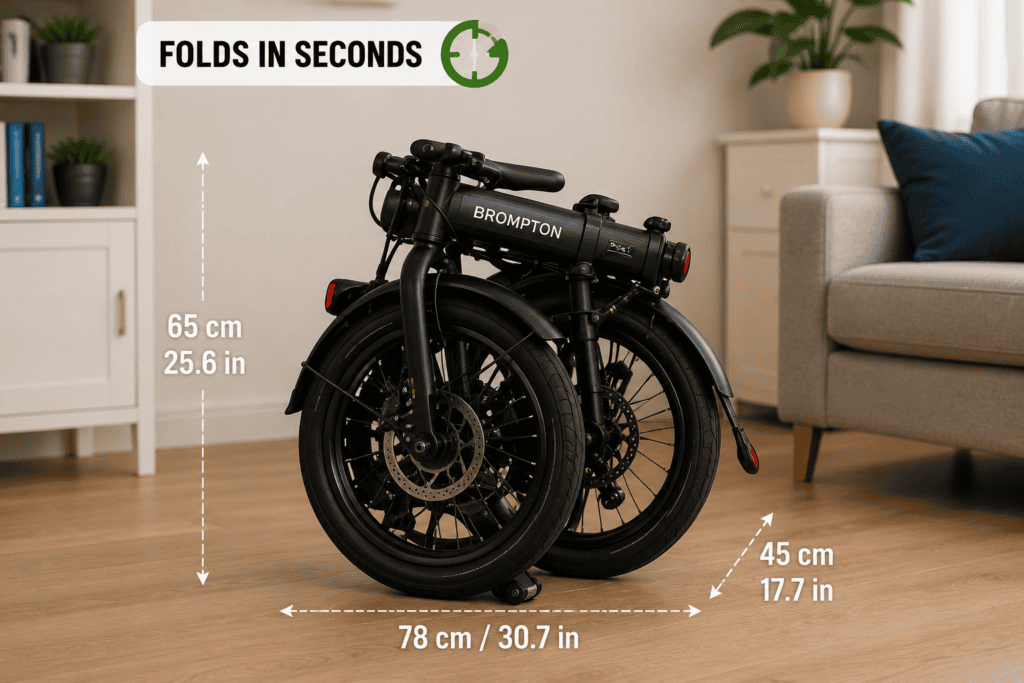
Test the fold yourself if you can. Some bikes fold in under 15 seconds. Others take a frustrating two minutes of fiddling with latches.
Also check the folded dimensions. Some “compact” bikes still don’t fit in small car trunks or narrow closets.
Weight & Frame Material
Aluminum frames are lighter but sometimes pricier. Steel frames are sturdier but heavier, which matters a lot if you’re carrying it up stairs daily.
Price Range in 2026
Here’s a rough breakdown based on current market pricing:
- Budget tier ($800-$1,200): Basic motor, shorter battery range, fewer smart features
- Mid tier ($1,300-$2,200): Better battery life, app connectivity, solid build quality
- Premium tier ($2,300+): Advanced smart features, GPS tracking, regenerative braking, top-tier components
According to Consumer Reports, spending more doesn’t always guarantee a better riding experience, so match the price to features you’ll actually use, not just brand name.
Step-by-Step: Testing an Electric Folding Bike Before You Buy
Don’t skip this. A test ride tells you things a spec sheet never will.
- Check the fold and unfold speed. Do it three times in a row to see if it’s consistent.
- Ride it for at least 10 minutes. Short test rides in a parking lot don’t reveal comfort issues.
- Test the pedal-assist levels. Switch between them while riding to feel the difference.
- Try the brakes at speed. Make sure they feel responsive, not delayed.
- Check the app connection. Pair your phone and see how smooth the setup process is.
- Ask about the warranty. Battery warranties especially vary a lot between brands.
- Lift the folded bike. You need to know if you can actually carry it up your stairs.
Common Mistakes to Avoid
I’ve made a couple of these myself, so learn from it instead of repeating them.
- Buying based on top speed alone. Comfort and range matter more day to day.
- Ignoring the battery warranty. Batteries degrade, and replacements aren’t cheap.
- Skipping the test ride. Photos and reviews never fully capture the feel of a bike.
- Choosing the cheapest option without checking motor quality. A weak motor struggles on hills and wears out faster.
- Not checking local e-bike laws. Some cities have speed and class restrictions worth knowing before you buy.
- Overlooking tire quality. Cheap tires puncture easily and affect handling more than people expect.
Expert Tips for Getting the Most Out of Your Ride
- Charge your battery to around 80% for daily use instead of always hitting 100%. It extends battery lifespan over time.
- Use a lower assist level on flat ground to stretch your range further.
- Store your bike indoors when possible, especially in extreme heat or cold.
- Clean the chain and gears every couple of weeks if you’re riding daily.
- Update the bike’s app and firmware regularly for security and performance fixes.
My Honest Experience With One
I’ll be straight with you. My first ride on a tech-driven folding bike felt weird. The pedal assist kicked in stronger than I expected, and I nearly wobbled into a curb.
But by day three, it felt completely natural. I started timing my commute against driving, and the bike won more often than not, especially during rush hour.
What surprised me most wasn’t the speed. It was how much I actually looked forward to the ride. That wasn’t something I expected from a “commute tool.”
Maintenance Tips to Extend Battery & Bike Life
A little upkeep goes a long way with these bikes. Here’s what I do on a regular basis:
- Wipe down the frame after wet rides to prevent rust
- Check tire pressure weekly
- Avoid letting the battery sit at 0% for long periods
- Get a professional tune-up once or twice a year
- Keep the folding joints lightly lubricated so they don’t stiffen up
Key Takeaways
- Tech-driven electric folding bikes combine portability with smart features like GPS, app tracking, and battery management.
- They’re a strong fit for mixed commutes involving public transit or tight storage spaces.
- Battery range, motor type, and fold mechanism matter more than flashy extras.
- Always test ride before buying, and check the warranty terms closely.
- Regular maintenance extends both battery life and overall bike performance.
Conclusion
A tech-driven electric folding bike isn’t just a trendy gadget. It’s a genuinely practical answer to the commuting headaches so many of us deal with in 2026.
Whether you’re dodging traffic, saving on gas, or just want a lighter footprint, the right electric folding bike can quietly become one of your favorite daily habits. Just take your time picking one, test ride it, and check those specs before you swipe your card.
Got questions about a specific model, or already own one? Drop a comment below and let me know how it’s working out for you. And if this guide helped, share it with a friend who’s still stuck in traffic every morning.
FAQs
1. How far can a tech-driven electric folding bike go on one charge? Most models cover 20-40 miles per charge, depending on terrain, rider weight, and assist level used.
2. Are electric folding bikes safe to ride in the rain? Yes, most are water-resistant, but avoid full submersion and dry the electrical components after riding in heavy rain.
3. Do I need a license to ride one? In most places, no, but rules vary by city and bike class, so check local regulations first.
4. How long does the battery last before needing replacement? Typically 3-5 years or around 500-800 charge cycles with proper care.
5. Can I take an electric folding bike on public transit? Yes, that’s actually one of its biggest advantages, since it folds small enough for trains and buses in most cases.
6. Is a mid-drive or hub motor better for hills? Mid-drive motors generally handle hills better because they use the bike’s gears more efficiently.
7. How much does a good electric folding bike cost in 2026? Expect to spend between $1,300 and $2,200 for a solid mid-tier model with decent smart features.
8. Are these bikes worth it if I only ride occasionally? If your rides are short and infrequent, a budget model may serve you just as well as a premium one.
MORE INFO VISIT: Androidheadline.co.uk