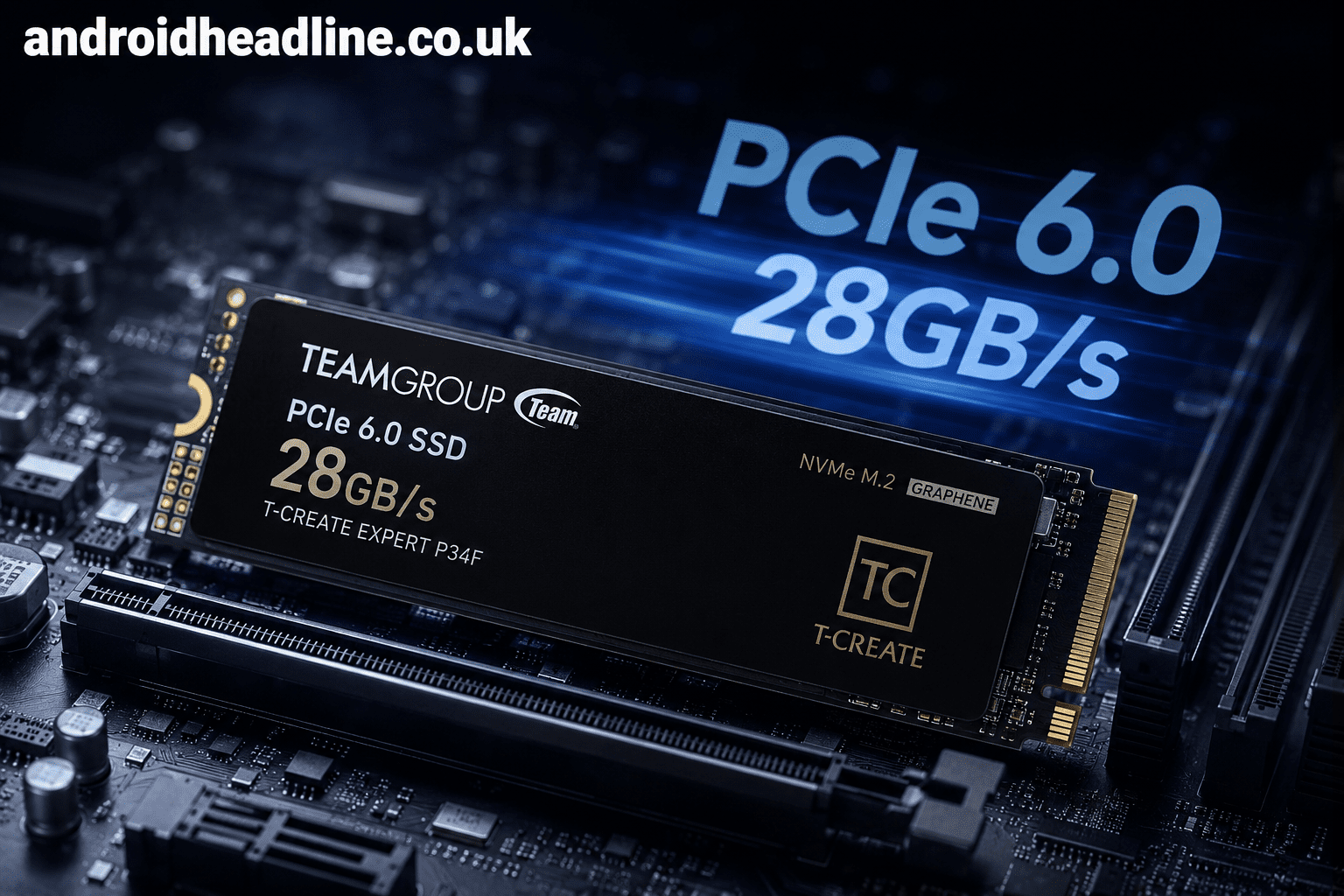
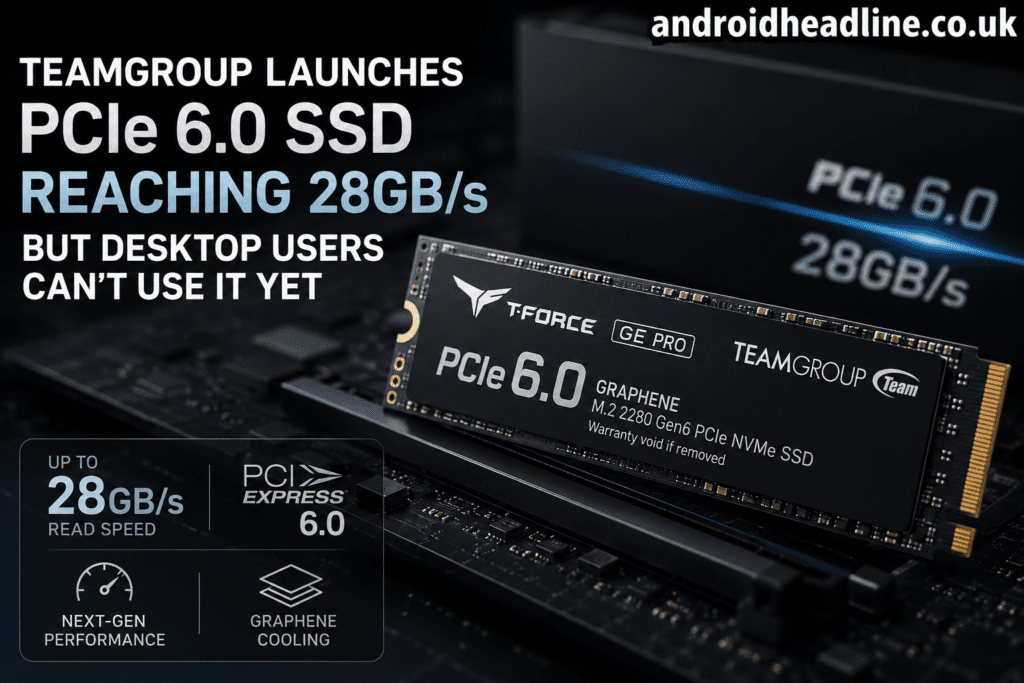
The storage world just took another big leap with the TeamGroup Launches PCIe 6.0 SSD Reaching 28GB/s, But Desktop Users Can’t Use It Yet announcement. On paper, it sounds wild—28GB/s speeds are almost hard to imagine when most of us are still using PCIe 4.0 drives in our PCs.
But here’s the catch: even though the hardware is real and impressive, desktop users can’t actually use it right now. That gap between “announced tech” and “real-world use” is getting bigger in the PC industry. In this post, I’ll break down what this SSD is, why it’s so fast, and why you probably won’t be installing one anytime soon.
What Is the TeamGroup PCIe 6.0 SSD Reaching 28GB/s?
TeamGroup has been pushing storage innovation for years, and this time they’ve shown off a PCIe 6.0 SSD prototype capable of reaching up to 28GB/s read speeds. That’s nearly double PCIe 5.0 SSDs, which already feel overkill for most users.
To put it simply, this drive is built for a future generation of computers that don’t even exist in the consumer market yet.
Why 28GB/s matters (even if you can’t use it)
At that speed, you could:
- Load massive 8K video files almost instantly
- Transfer entire game libraries in seconds
- Handle AI datasets without waiting on storage bottlenecks
But here’s the truth—it’s more about future-proofing than daily use right now.
Why Desktop Users Can’t Use PCIe 6.0 SSDs Yet
Even though the TeamGroup Launches PCIe 6.0 SSD Reaching 28GB/s, But Desktop Users Can’t Use It Yet, the limitation isn’t the SSD itself. It’s everything around it.
1. No consumer PCIe 6.0 motherboards
Right now, PCIe 6.0 support is mostly limited to:
- Enterprise servers
- Data centers
- Early engineering platforms
Your typical gaming or office PC motherboard doesn’t support it yet.
2. CPU and chipset support is missing
Even if you somehow had the SSD, your CPU and chipset wouldn’t understand PCIe 6.0 communication lanes.
3. Cooling and power challenges
At these speeds, heat becomes a serious issue. Current consumer systems aren’t designed for this level of sustained bandwidth.
According to the PCI-SIG organization (which defines PCIe standards), widespread adoption of PCIe 6.0 in consumer devices will take time due to hardware ecosystem readiness issues (source: https://pcisig.com).
How This Impacts Real Users Today
So what does this mean for someone building a PC in 2026?
Honestly, not much right now. But it does tell us where things are heading.
For gamers
Even PCIe 4.0 SSDs already load games fast enough that most people can’t tell the difference.
For content creators
PCIe 5.0 is already overkill for most editing workflows unless you’re working with huge RAW 8K footage.
For tech enthusiasts
This is exciting because it shows we’re entering an era where storage won’t be a bottleneck anymore.
A Quick Personal Take
I remember upgrading from a SATA SSD to my first NVMe drive. It felt like magic—Windows booted in seconds, games loaded instantly, everything just snapped open.
Now when I look at something like the TeamGroup Launches PCIe 6.0 SSD Reaching 28GB/s, But Desktop Users Can’t Use It Yet, I get the same feeling… but also a bit of confusion. It’s like having a Formula 1 car engine sitting in your garage, but the roads outside are still dirt tracks.
It’s impressive, but also a reminder that software and hardware don’t always move at the same speed.
Should You Wait for PCIe 6.0 SSDs?
Short answer: no, not yet.
If you’re upgrading your PC today, your best options are still:
- PCIe 4.0 SSDs (best value)
- PCIe 5.0 SSDs (for high-end builds)
PCIe 6.0 is more of a “watch this space” technology for now.
What you should do instead
- Focus on capacity (1TB or 2TB minimum)
- Choose a reliable NAND brand (TLC preferred)
- Ensure good cooling for NVMe drives
- Don’t overspend chasing speed you won’t feel
What Happens Next in Storage Technology?
The roadmap is clear. PCIe 6.0 will slowly move from enterprise systems into enthusiast PCs over the next few years.
Once motherboard manufacturers like ASUS, MSI, and Gigabyte fully adopt it, we’ll start seeing real consumer drives.
And when that happens, speeds like 28GB/s won’t just be a headline—they’ll be normal.
FAQ Schema (Basic)
Q1: Can I use PCIe 6.0 SSDs on my current PC?
A: No, current consumer motherboards and CPUs do not support PCIe 6.0 yet.
Q2: How fast is the TeamGroup PCIe 6.0 SSD?
A: It can reach up to 28GB/s in theoretical performance.
Q3: When will PCIe 6.0 be available for gamers?
A: Likely in the next few years as new platforms and chipsets are released.
Conclusion
The TeamGroup Launches PCIe 6.0 SSD Reaching 28GB/s, But Desktop Users Can’t Use It Yet story is less about today and more about tomorrow. It shows how fast storage technology is evolving, even if our PCs aren’t ready to catch up just yet.
For now, PCIe 4.0 and 5.0 SSDs are still the smart choice. But it’s exciting to know what’s coming next—and it’s coming faster than most of us expect.
If you’re into PC hardware, keep an eye on this space. The next few years are going to be interesting.
Feel free to share your thoughts or subscribe for more tech updates like this.