I’ll be honest with you. A few months ago, I asked an AI tool to “polish” my resume. It came back fast, clean, and… completely lifeless. Every sentence sounded like it belonged to someone else.
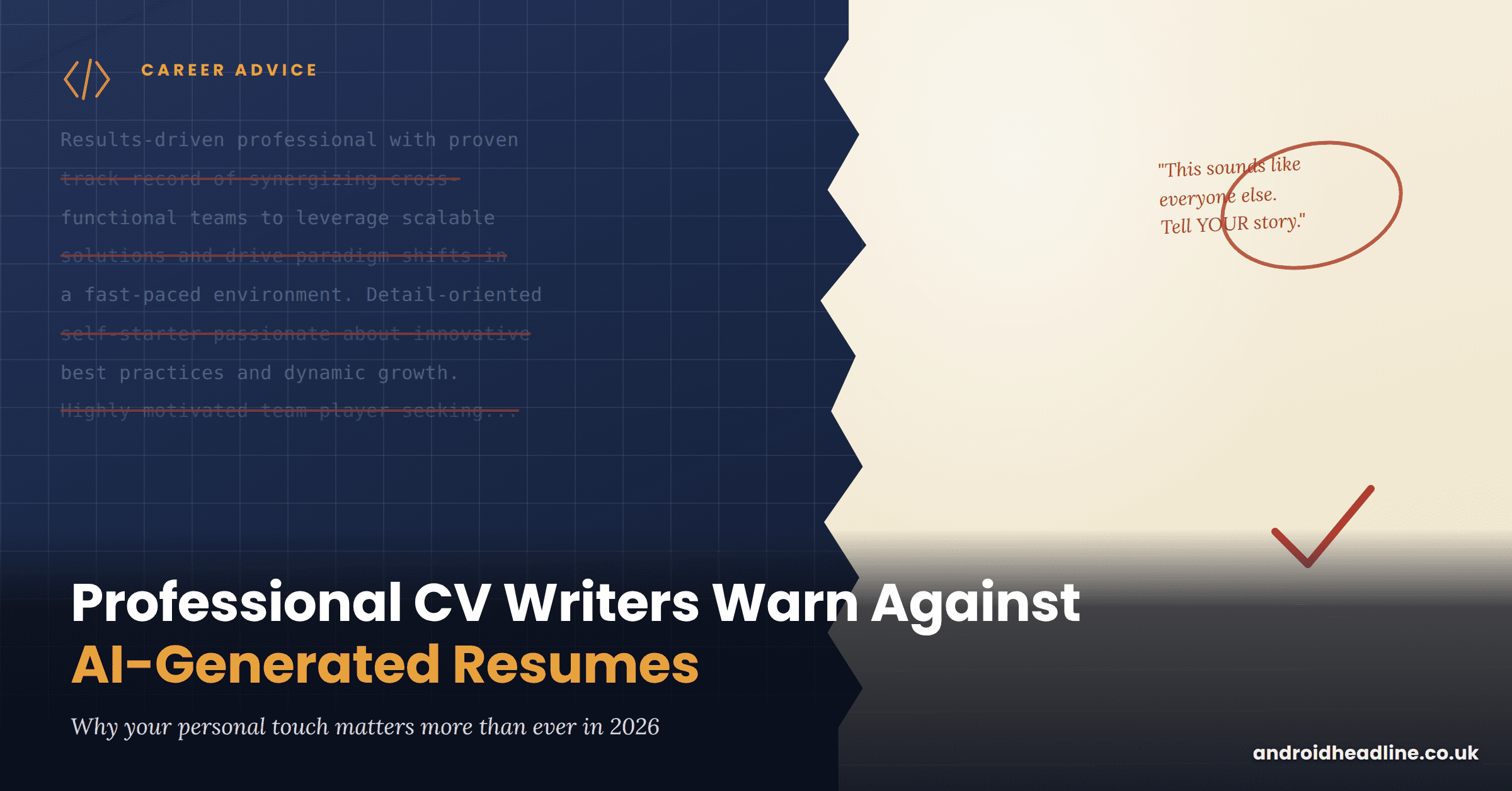
That’s exactly what professional CV writers keep telling me too. AI-generated resumes are flooding inboxes everywhere, and recruiters are starting to notice the pattern. They can spot the same five phrases over and over, the same hollow buzzwords, the same “results-driven professional” opener that says nothing real.
So in this post, I want to walk you through why career experts are sounding the alarm, what’s actually going wrong, and how you can use AI as a tool instead of a replacement for your own voice.
Why So Many Job Seekers Are Turning to AI Resume Tools
I get the appeal. Writing about yourself is awkward. AI promises a quick fix, and it’s free.
A lot of applicants also believe robots are reading their resumes anyway, so why not let a robot write it? It feels like a fair trade.
But here’s the catch professional CV writers keep pointing out: a real human almost always reads your resume eventually, usually right before the interview decision gets made.
What Professional CV Writers Are Actually Seeing
I spoke with a few resume coaches for this piece, and they all said some version of the same thing. AI-written resumes tend to blur together.
The “Generic Resume” Problem
Every AI tool pulls from the same training patterns, so the output sounds eerily similar across thousands of applicants. Phrases like “proven track record,” “synergize,” and “dynamic self-starter” show up constantly.
A resume coach I follow online put it simply: it reads like a job description wearing a costume, not a real career story.
Missing the Small, Specific Details
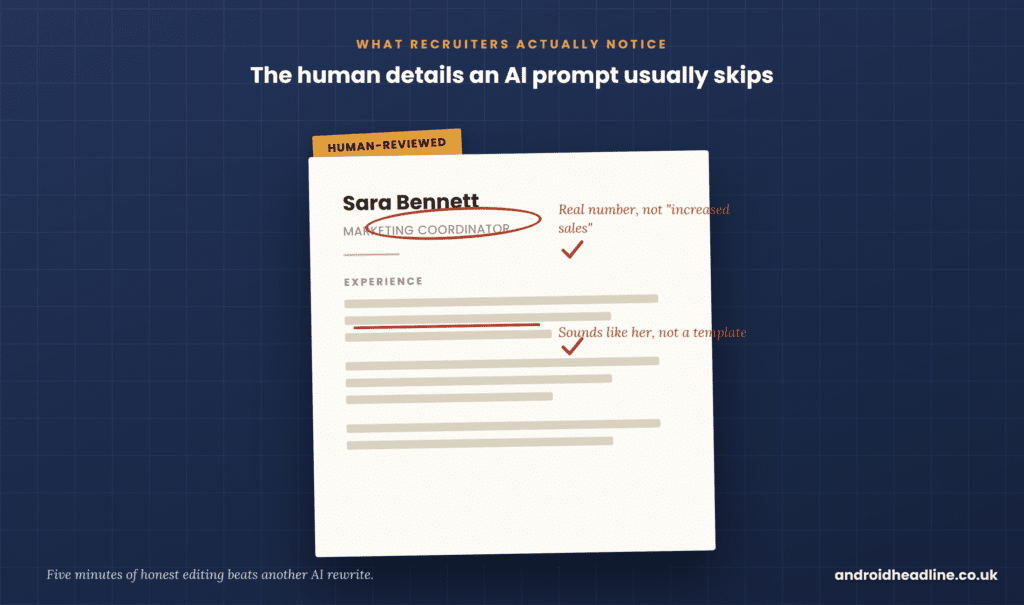
AI doesn’t know that you stayed late to fix a client’s broken spreadsheet at 11 p.m., or that your manager specifically praised your training program. Those tiny, true details are what make a hiring manager remember you.
Why Recruiters Can Tell (And Why It Costs You)
Recruiters read hundreds of resumes a year. They develop a kind of radar for sameness, the same way you’d notice a form-letter email from a friend.
According to a 2025 survey from TopResume, over a third of hiring managers say they can spot an AI-generated resume in under twenty seconds, and accuracy was even higher among Millennial and Gen X recruiters (TopResume, 2025).
That speed matters. Twenty seconds is roughly how long it takes to glance at a resume and decide whether it’s worth a second look.
A separate 2025 report from Resume Now found that most hiring managers reject AI-written applications specifically because they lack personalization, while the vast majority say personal, specific details are what signal genuine interest in the role (Resume Now, 2025).
In other words, it’s rarely the AI use itself that gets you rejected. It’s the genericness.
The Real Risk: AI Resumes Can Cost You the Interview
Here’s the part that worries career coaches the most. A fully AI-written resume can promise things you can’t actually back up in an interview.
If your resume claims you “led cross-functional strategic initiatives” but you can’t explain what that actually meant day to day, you’ll stumble the moment someone asks a follow-up question. That mismatch is a bigger red flag than imperfect writing ever was.
I’d rather see a slightly clunky sentence that’s true than a polished one that falls apart under questioning.
How to Use AI Without Losing Your Personal Touch
AI tools aren’t the enemy here. Used the right way, they can actually save you time. The trick is staying in the driver’s seat.
- Start with your own draft first. Write down your real achievements, even messy and unpolished, before you touch any AI tool.
- Use AI for structure, not substance. Let it help with formatting or grammar, but keep your actual stories and numbers.
- Add specific numbers and outcomes. Replace “improved efficiency” with the real number, like “cut onboarding time by 30%.”
- Read it out loud. If it doesn’t sound like something you’d actually say in conversation, rewrite it.
- Get a second set of human eyes. A friend, mentor, or a professional resume writer will catch generic phrasing you might miss.
- Tailor every version. Copy-pasting the same AI resume to fifty jobs is the fastest way to look like everyone else.
For more on getting past the screening software itself, check out our guide on how to write a resume that beats the ATS and our breakdown of common resume mistakes that cost you interviews.
A Quick Story From My Own Job Search
A couple of years back, I rewrote my resume using nothing but AI suggestions. It looked impressive on screen. Then a friend who hires for a living read it and asked, “Wait, what did you actually do here?”
I couldn’t answer in the same confident, specific way the bullet point implied. That was my wake-up call. I went back, stripped out the fluff, and replaced it with three real projects I could talk about for ten minutes straight. I got the next interview I applied for.
Should You Hire a Professional CV Writer Instead?
If writing about yourself still feels impossible, a professional CV writer isn’t cheating, it’s collaboration. A good one won’t hand you a template either. They’ll ask you questions, pull out your real wins, and help you say them clearly. If you’re weighing the cost, our post on whether it’s worth hiring a professional resume writer breaks down what to expect and what it typically costs.
Final Thoughts
AI can be a genuinely useful starting point for your resume, but it can’t replace the specific, true, slightly imperfect details that make you sound like a real person. Recruiters notice the difference, often within seconds, and it can be the line between an interview and a silent rejection.
So go ahead and use the tools. Just make sure your voice is still the loudest one on the page.