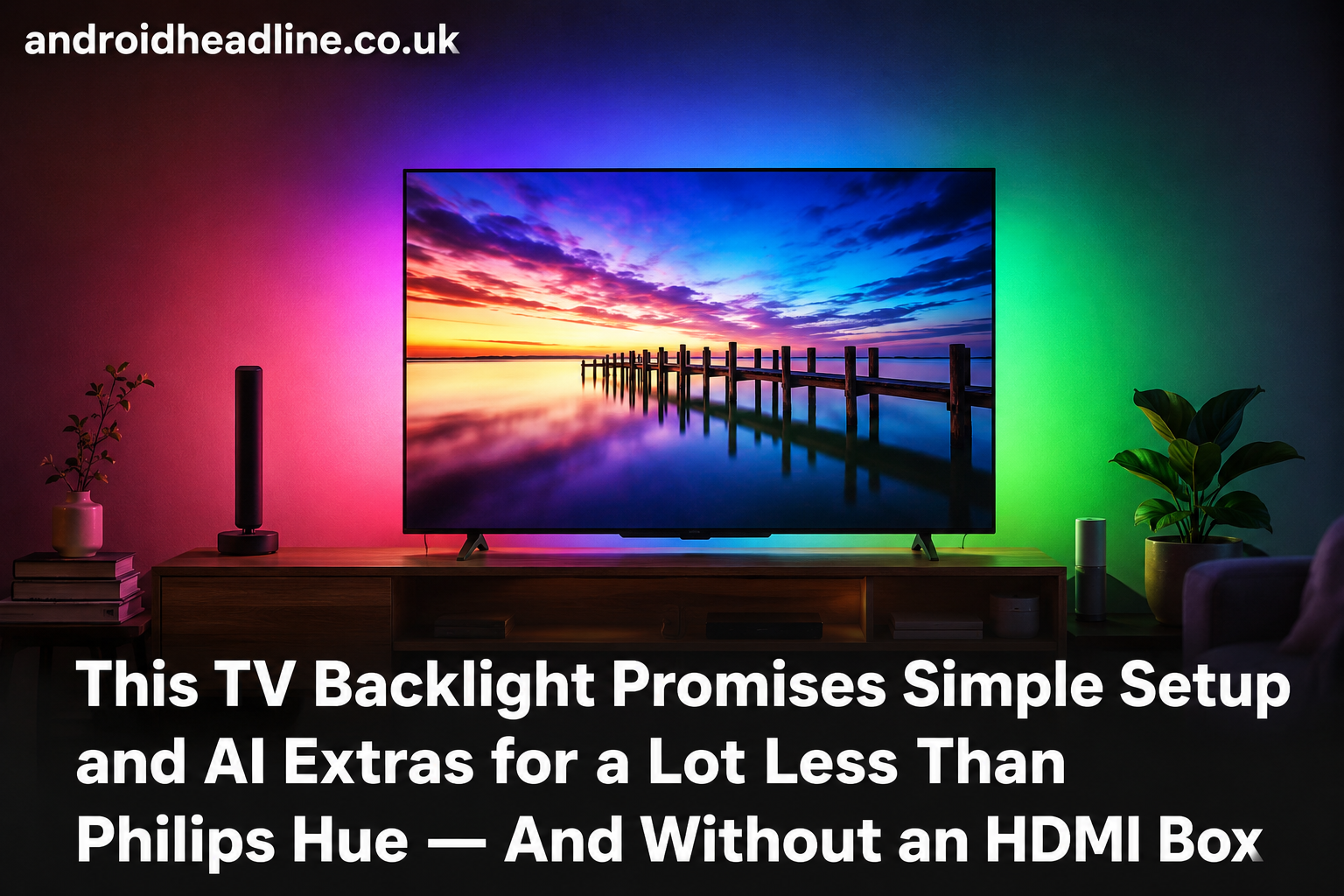
Smart TV backlights have become one of the most popular upgrades for home entertainment setups, adding immersive ambient lighting that reacts to on-screen content. While Philips Hue Sync remains one of the best-known options in this category, its expensive ecosystem and required HDMI Sync Box have pushed many users to search for simpler and more affordable alternatives.
Now, a new AI-powered TV backlight system is aiming to deliver the same cinematic experience without the complicated setup — and at a significantly lower price.
A Simpler Alternative to Philips Hue
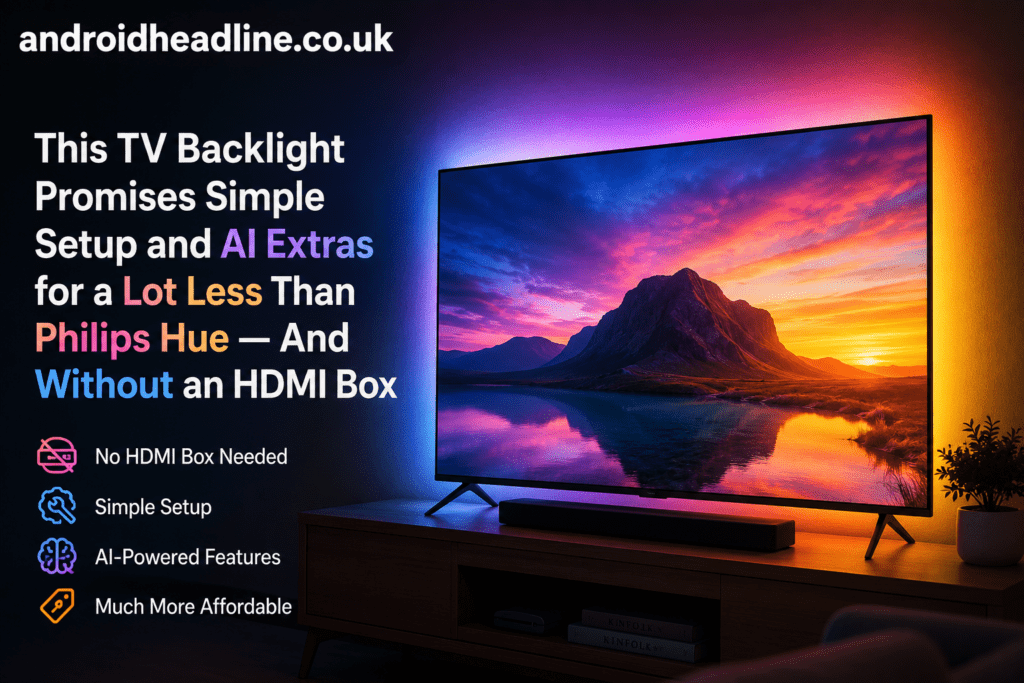
One of the biggest complaints about premium TV lighting systems is the installation process. Traditional sync lighting solutions often require users to connect multiple cables, configure HDMI boxes, and purchase additional smart hubs before everything works properly.
This new TV backlight system removes much of that complexity.
Instead of relying on an external HDMI Sync Box, the lighting system uses an intelligent camera-based setup that attaches to the top of the television. The camera analyzes the colors displayed on the screen in real time and instantly adjusts the LED lighting behind the TV to match the action.
The result is a more immersive viewing experience for movies, gaming, and sports — without the need to reroute HDMI cables or replace existing streaming devices.
AI Features Bring Smarter Lighting Effects
What makes this system stand out is the inclusion of AI-powered enhancements designed to improve color accuracy and responsiveness.
According to the company, the AI engine can better recognize scene transitions, darker environments, and rapid action sequences to create smoother and more natural lighting effects. This helps reduce delays and improves synchronization compared to many budget TV backlight kits currently available on the market.
The system also includes several smart modes, including:
- Movie mode for cinematic lighting
- Gaming mode with faster reaction times
- Music sync mode
- Dynamic ambient effects
- Voice assistant integration
Users can customize brightness, color intensity, and animation styles directly from a companion mobile app.
No HDMI Box Means Easier Compatibility
One major advantage of camera-based TV lighting systems is broader compatibility.
Since the lights do not rely on HDMI signal passthrough, they work with virtually any content source, including:
- Smart TV apps
- Streaming sticks
- Gaming consoles
- Cable boxes
- Blu-ray players
This eliminates one of the biggest limitations of HDMI-based systems, especially for users with newer TVs featuring advanced HDMI 2.1 gaming features like 4K 120Hz and VRR support.
Without an HDMI box in the middle, users can maintain full gaming performance while still enjoying synchronized ambient lighting.
A More Affordable Smart Lighting Experience
Price remains one of the biggest selling points.
Philips Hue setups can quickly become expensive once users add the Sync Box, gradient light strips, and Hue Bridge. Complete setups often cost several hundred dollars.
This new TV backlight system is positioned as a more budget-friendly alternative while still offering many premium-style features.
For users who want immersive lighting without investing heavily into a full smart lighting ecosystem, this could become an appealing option.
Growing Competition in Smart TV Lighting
The smart ambient lighting market has expanded rapidly over the last few years. Brands like Govee, Nanoleaf, and several emerging companies are now competing aggressively with Philips Hue by offering simpler installations, lower pricing, and AI-driven software improvements.
As consumers continue upgrading their home entertainment spaces, affordable reactive lighting systems are becoming increasingly attractive — especially for gamers and movie enthusiasts looking to enhance immersion without dealing with complex hardware setups.
If these newer AI-powered systems can deliver reliable performance at a lower price point, Philips Hue may face stronger competition than ever before.
Final Thoughts
Smart TV backlights are no longer limited to expensive enthusiast setups. With easier installation, AI-powered lighting effects, and lower pricing, newer alternatives are making immersive ambient lighting more accessible to mainstream users.
For anyone wanting a cleaner setup without an HDMI Sync Box — and without spending a fortune — this latest TV backlight solution could be one of the most interesting options to watch this year.