Sustainability has become more than just a buzzword. Today, customers, governments, and businesses all want products with a lower environmental impact. One term that often comes up in sustainability discussions is Recyclatanteil. If you’ve seen this word on packaging, sustainability reports, or environmental certifications, you may be wondering what it actually means and why it matters.
In simple terms, Recyclatanteil refers to the percentage of recycled material used in a product or packaging. Understanding this figure can help businesses reduce waste, lower resource consumption, and meet sustainability goals. It can also help consumers make smarter purchasing decisions.
In this guide, I’ll explain what Recyclatanteil means, how to calculate recycled content, why it’s important, and practical ways to improve it. By the end, you’ll have a clear understanding of how recycled content contributes to a more sustainable future.
What Is Recyclatanteil?
Recyclatanteil is a German term that translates to recycled content percentage. It describes how much of a product’s total material comes from recycled sources rather than newly extracted raw materials.
For example, if a plastic bottle contains 60% recycled plastic and 40% virgin plastic, its Recyclatanteil is 60%.
This metric is commonly used in:
- Plastic packaging
- Paper products
- Construction materials
- Textiles
- Electronics
- Automotive manufacturing
Companies often publish recycled content percentages as part of their sustainability reporting and environmental commitments.
Why Recyclatanteil Matters for Sustainability
Using recycled materials provides several environmental benefits.
Reduces Waste Sent to Landfills
When materials are recycled and reused, fewer items end up in landfills or incinerators. This helps reduce pollution and conserves valuable space.
Conserves Natural Resources
Producing materials from recycled sources usually requires fewer raw resources.
Examples include:
- Recycled paper reduces the need for cutting trees.
- Recycled aluminum reduces mining activities.
- Recycled plastic reduces petroleum consumption.
Lowers Carbon Emissions
According to the U.S. Environmental Protection Agency (EPA), manufacturing products from recycled materials often uses less energy than producing them from virgin materials.
Source: EPA Sustainable Materials Management Program.
Meets Consumer Expectations
Many customers actively seek products with sustainable packaging and environmentally responsible sourcing. A higher Recyclatanteil can become a strong selling point.
Types of Recycled Content
Understanding different types of recycled content is important when calculating Recyclatanteil.
Post-Consumer Recycled Content (PCR)
This material comes from products that consumers have already used and disposed of through recycling programs.
Examples:
- Recycled water bottles
- Recycled cardboard boxes
- Recycled aluminum cans
PCR content is often viewed as the most environmentally beneficial form of recycling.
Pre-Consumer Recycled Content
Also called industrial recycled content, this material comes from manufacturing waste that is recovered and reused before reaching consumers.
Examples include:
- Factory plastic scraps
- Paper trimming waste
- Textile production leftovers
Closed-Loop Recycling
Materials are recycled back into the same product type.
Example:
- Aluminum can → Aluminum can
Open-Loop Recycling
Materials are recycled into different products.
Example:
- Plastic bottle → Outdoor furniture
How to Calculate Recyclatanteil
Calculating recycled content is relatively straightforward.
Basic Formula
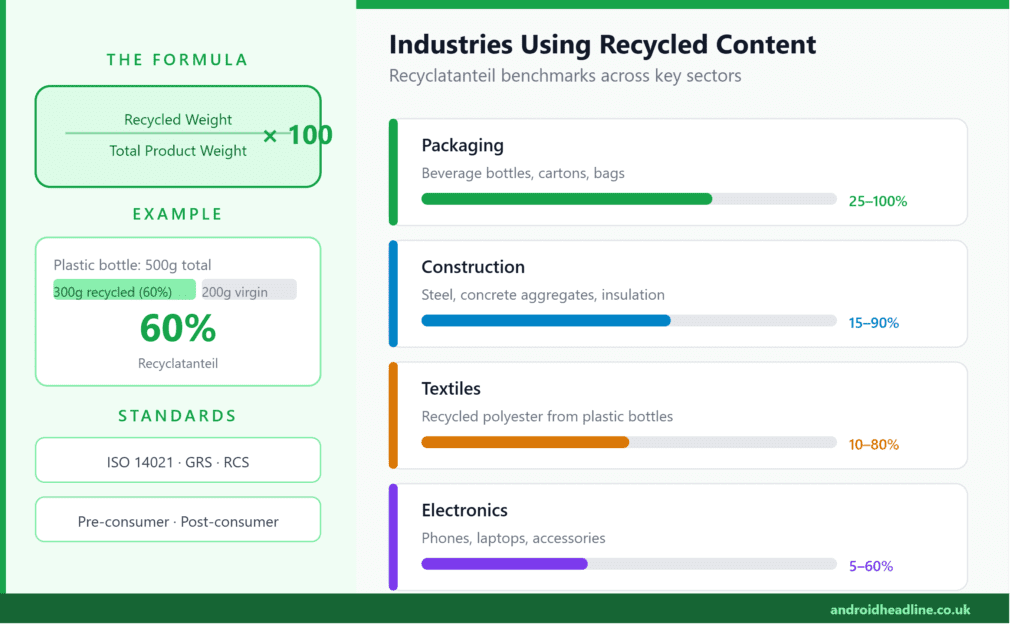
Recyclatanteil (%) = (Weight of Recycled Material ÷ Total Product Weight) × 100
Example 1: Plastic Packaging
Suppose a package weighs 500 grams.
Material composition:
- 300g recycled plastic
- 200g virgin plastic
Calculation:
(300 ÷ 500) × 100 = 60%
Recyclatanteil = 60%
Example 2: Cardboard Box
A cardboard box weighs 1 kilogram.
Material composition:
- 800g recycled cardboard
- 200g virgin fibers
Calculation:
(800 ÷ 1000) × 100 = 80%
Recyclatanteil = 80%
Step-by-Step Calculation Process
- Determine the total product weight.
- Identify all recycled materials used.
- Measure the weight of recycled content.
- Divide recycled weight by total weight.
- Multiply by 100.
- Record and verify results.
Many organizations use laboratory testing and supplier documentation to confirm recycled content percentages.
Industry Standards for Measuring Recycled Content
Businesses often follow recognized standards when reporting Recyclatanteil.
ISO 14021
The International Organization for Standardization (ISO) provides guidelines for environmental claims, including recycled content declarations.
Global Recycled Standard (GRS)
The Global Recycled Standard verifies recycled materials and tracks them through the supply chain.
Recycled Claim Standard (RCS)
The RCS helps verify the presence of recycled material in products through independent certification.
According to Textile Exchange, these standards improve transparency and help consumers trust sustainability claims.
Source: TextileExchange.org
Benefits of Increasing Recyclatanteil
Higher recycled content offers advantages beyond environmental protection.
Cost Savings
In some industries, recycled materials can be less expensive than virgin materials, especially when raw material prices fluctuate.
Improved Brand Reputation
Consumers increasingly reward companies that demonstrate environmental responsibility.
Products with higher recycled content often stand out on crowded store shelves.
Regulatory Compliance
Many countries are introducing regulations that require minimum recycled content levels.
Companies that act early can avoid future compliance challenges.
Better ESG Performance
Environmental, Social, and Governance (ESG) reporting often includes recycled content metrics.
A strong Recyclatanteil can improve sustainability scores and investor confidence.
Practical Ways to Improve Recyclatanteil
Many organizations want to increase recycled content but don’t know where to start.
Here are practical strategies.
Work with Certified Suppliers
Choose suppliers that provide:
- Recycled material certifications
- Traceability documents
- Third-party verification
Reliable sourcing makes reporting much easier.
Redesign Products
Some products are designed in ways that limit recycled material use.
Consider:
- Simplifying material combinations
- Reducing unnecessary layers
- Using recyclable polymers
Increase Post-Consumer Material Usage
Post-consumer recycled content generally has the strongest sustainability impact.
Look for opportunities to replace virgin materials with PCR alternatives.
Improve Internal Recycling Programs
Manufacturing facilities can recover and reuse production waste.
Examples include:
- Plastic regrind systems
- Scrap metal recovery
- Textile offcut recycling
Set Measurable Goals
Instead of vague sustainability promises, establish specific targets.
For example:
- 30% recycled content by 2027
- 50% recycled packaging by 2030
Clear goals help teams stay accountable.
Common Challenges When Calculating Recyclatanteil
Although the calculation seems simple, real-world implementation can be more complicated.
Supply Chain Complexity
Large supply chains often involve multiple suppliers and material sources.
Tracking recycled content accurately requires strong documentation.
Material Quality Concerns
Some recycled materials may have different performance characteristics compared to virgin materials.
Companies must balance sustainability with product quality.
Verification Requirements
Customers and regulators increasingly expect proof of recycled content claims.
Independent audits and certifications may be necessary.
Inconsistent Data
Supplier records can sometimes vary in quality or reporting methods.
Regular verification helps maintain accuracy.
A Personal Observation on Recycled Content
A few years ago, I started paying more attention to product packaging while shopping. I noticed that some brands clearly displayed recycled content percentages, while others provided little information. The difference was surprising. As a consumer, seeing transparent sustainability information made me trust certain brands more. It showed that even a simple metric like Recyclatanteil can influence purchasing decisions and encourage companies to improve environmental performance.
Recyclatanteil in Different Industries
Packaging Industry
Many beverage companies now use recycled PET plastic bottles with recycled content percentages ranging from 25% to 100%.
Construction Industry
Builders increasingly use recycled steel, concrete aggregates, and insulation materials.
Textile Industry
Fashion brands use recycled polyester from discarded plastic bottles and textile waste.
Electronics Industry
Manufacturers are incorporating recycled plastics and metals into smartphones, laptops, and accessories.
These industries demonstrate how recycled content can be applied across diverse products and markets.
Future Trends in Recyclatanteil
The importance of recycled content is expected to grow significantly.
Emerging trends include:
- Mandatory recycled content regulations
- Digital product passports
- Enhanced material tracking systems
- Circular economy initiatives
- AI-assisted recycling technologies
As sustainability expectations rise, Recyclatanteil will likely become a standard performance indicator for many businesses.
Frequently Asked Questions (FAQ)
What does Recyclatanteil mean?
Recyclatanteil refers to the percentage of recycled material contained in a product or packaging.
How is Recyclatanteil calculated?
Use the formula:
(Recycled Material Weight ÷ Total Product Weight) × 100
Is post-consumer recycled content better?
Generally, yes. Post-consumer recycled material helps divert waste from landfills and is often considered more environmentally beneficial.
Why do companies report recycled content?
Companies use recycled content reporting to demonstrate sustainability efforts, comply with regulations, and meet customer expectations.
Can all products have high Recyclatanteil values?
Not always. Product performance, safety requirements, and material availability can affect how much recycled content can be used.
Conclusion
Understanding Recyclatanteil is an important step toward improving sustainability. Whether you’re a manufacturer, sustainability professional, or environmentally conscious consumer, knowing how recycled content is measured helps you make better decisions.
The process is simple: determine the amount of recycled material, divide it by the total product weight, and multiply by 100. More importantly, increasing recycled content can reduce waste, conserve resources, lower emissions, and strengthen brand reputation.
As governments and consumers continue to prioritize sustainability, Recyclatanteil will become an increasingly valuable metric. Start measuring it, set realistic improvement goals, and look for opportunities to increase recycled content throughout your products and operations.
If you found this guide helpful, leave a comment, share it with your network, and subscribe for more sustainability insights and practical environmental tips.