Smart homes are getting better every year. Most people are still using basic things like smart lights, cameras and voice assistants. What a lot of users do not know is that the real improvement in 2026 is not a gadget but smart sensors that automatically make your whole home experience better.
These sensors are changing how homes find out when someone is there, check the air quality and react to people in time. If your smart home still feels like you have to do everything yourself you are probably missing these sensors.
Why Smart Sensors Are Important
Old smart home devices work when you tell them to. But new sensors are different. They watch, find out what is happening and do things automatically.
This means your home can do things like:
- Turn on the lights when you enter a room
- Change the temperature based on if someone’s there
- Tell you if there is a problem with the air quality
- Find out if someone is moving around even when the cameras are off
In short, sensors make your home do things before you even have to ask, or just react to what you say.
The Important Smart Home Sensors
Here are the main types of sensors that are becoming necessary in modern smart homes:
1. Motion Sensors
These are the most common smart sensors. They find out when someone is moving around by using heat signatures.
They can be used for:
- turning on and off the lights
- Telling you if someone is there when they should not be
- Saving energy by turning off things when no one’s around
But older versions can sometimes go off when pets are around or when it gets hot.
2. MmWave Presence Sensors
This is an improvement in smart homes.
Unlike motion sensors mmWave sensors can find out:
- When someone is moving, even if it is a little bit
- If someone is there even if they are not moving
- If someone is in the room accurately
This matters because your lights will not turn off just because you are sitting still on the sofa.
3.. Window Sensors
These simple sensors are still very useful for keeping your home safe.
They can:
- Tell you away if a door or window is open or closed
- Work with alarms
- Automatically lock doors
They are often overlooked. They are one of the most reliable smart home improvements.
4. Temperature and Humidity Sensors
Feeling comfortable is a part of having a smart home.
These sensors help:
- change the temperature
- Keep the air inside the home comfortable
- Stop mold and humidity from damaging things
They are especially useful in areas where the weather’s very hot or very cold.
5. Air Quality Sensors
This is becoming one of the important smart home improvements in 2026.
They measure:
- The air quality or how good the air is to breathe
- The chemicals in the air from things like furniture and paint
- How polluted the air is inside
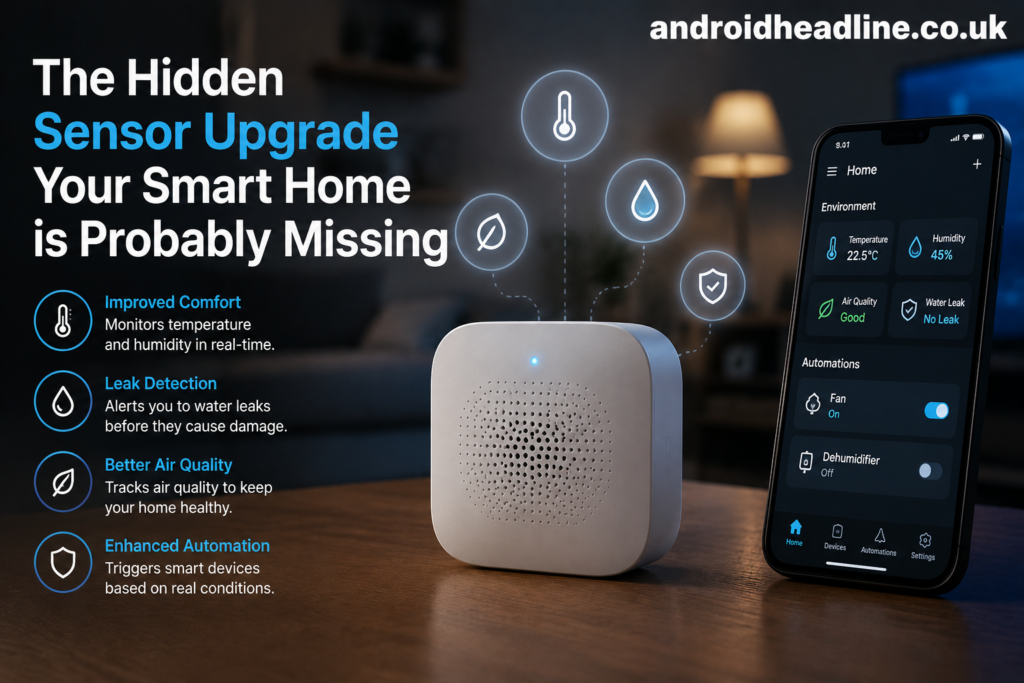
For example if the air quality is bad a smart fan or air purifier can turn on automatically.
How These Sensors Make a Smart Home Better
When you use all these sensors together they create a home that can take care of itself.
- The lights turn on and off based on if someone is there
- The air purifier turns on when the air is polluted
- The security system reacts away if something unusual happens
- The home uses energy without you having to do anything
This is what makes a basic smart home into a really smart home system.
Do You Need These Sensors?
If your smart home only has:
- lights
- Smart plugs
- A voice assistant
Then yes you are missing the most important part of making your home smart.
Sensors are what make everything work together and make your home feel really smart.
Final Thoughts
The real improvement in homes is not about having louder speakers or brighter lights, it is about having a smart system that works in the background. That is what smart sensors do.
Whether it is finding out if someone is there or checking the air quality these sensors can completely change how your home works without you having to do anything.
If you are planning to make your home smarter in 2026 start with sensors because everything else depends on them.