Ever Googled a tool name, gotten five different “complete guides,” and still had no clue what the thing actually does? That’s exactly what happened to me with Hypackle.
If you’ve searched for it too, you’ve probably noticed something weird. Every article describes it differently. One calls it a productivity platform. Another says it’s an AI content tool. A third barely mentions what it does at all. That’s not normal, and it’s worth talking about.
So instead of another vague “features and benefits” guide, I’m going to walk you through what I found when I actually looked into Hypackle, why so many confusing articles exist about it, and how you can spot this pattern yourself before you trust the next “ultimate guide” that shows up in your search results.
What Is Hypackle, Really?
Here’s the honest answer: it’s not clear.
When I searched for Hypackle, I found a handful of blog posts describing it as a “smart digital platform” for productivity, content creation, and workflow automation. Sounds specific enough, right? But none of these posts link to an actual website, sign-up page, pricing plan, or company behind the product.
I also found a completely unrelated gaming site with a similar name, plus at least one article that flat-out says Hypackle is just a catchy, made-up word with no real meaning — good for branding, but not tied to any actual tool.
So we’ve got three different stories about the same name. That’s usually a sign something’s off.
Why Is Hypackle Everywhere on Google?
This part actually has a pretty clear explanation, and it’s more interesting than the tool itself.
Search engines reward fresh, keyword-rich content. If a made-up or obscure term starts getting searched, it creates an opening. Content sites can publish a “complete guide” to that term, rank for it quickly since there’s no real competition, and pull in curious clicks — even if there’s nothing solid to actually report on.
I noticed a few patterns across the Hypackle articles I read:
- Vague, interchangeable descriptions (“innovative platform,” “seamless experience”) that could apply to almost anything
- Fake-sounding customer quotes with first names and initials only
- No links to an official site, app store listing, or company page
- Content that reads like it was written to hit a word count, not to explain something real
None of that proves bad intent on its own. But stacked together, it’s a familiar pattern for filler content built around a trending search term rather than a real product.
What the Sources Actually Claim (And Why I’m Not Repeating It as Fact)
I want to be upfront here instead of padding this section with recycled claims.
A couple of sites describe Hypackle as combining task management, dashboards, and AI-generated content tools. That might describe a real product somewhere. It might also just be generic productivity-software language that shows up in a lot of templated content. Without an official source to verify against, I can’t responsibly tell you which one it is — and I’d rather say that plainly than dress up a guess as an expert breakdown.
How to Vet a “New Tool” Before You Trust a Guide About It
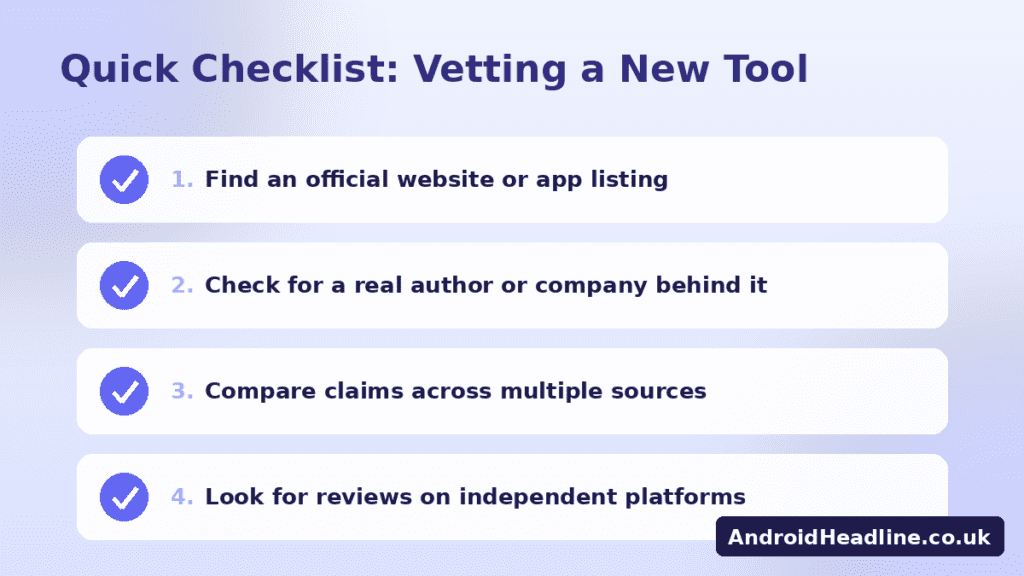
This happens more than people realize, so here’s a quick process I actually use myself when a tool name looks unfamiliar.
1. Look for an official source first
Search the name plus “official site” or check if it has a real domain, app store listing, or verified social account. If you can’t find one, be cautious.
2. Check who’s writing about it
If every article is a generic “guide” with no author bio, no screenshots, and no specific pricing, that’s a red flag. Real tools usually have real documentation.
3. Cross-check the claims
If three articles describe the same “tool” three different ways, that’s a strong sign nobody’s actually used it.
4. Search for reviews on independent platforms
Sites like G2, Trustpilot, or Reddit threads tend to surface real user experiences — good or bad. Silence there usually means something.
I ran into something similar last year with a “must-have SEO tool” that turned out to be a rebranded spreadsheet template with a fancy landing page. Same pattern: confident-sounding blog posts, no actual product behind them. It took me twenty minutes of digging to realize I’d almost recommended it to a client. Lesson learned — I check twice now, even when a tool sounds legit.
The Bigger Trend Worth Knowing About
This isn’t really about Hypackle specifically. It’s part of a wider issue with how search results get flooded with thin, AI-assisted content chasing trending keywords, something Google has publicly said it aims to reduce through its helpful content guidance (Google Search Central). Digital literacy researchers have also flagged how quickly unverified claims spread when they’re repeated across multiple sites, even without a credible original source (Reuters Institute Digital News Report).
Knowing how to spot the pattern protects you from wasting time, or worse, plugging real work data into a tool you can’t actually verify.
Wrapping It Up
Here’s the short version: Hypackle shows up everywhere online, but no two sources agree on what it actually is, and none point to a verifiable product. That’s less “hidden gem” and more “content built around a trending search term.”
If you’ve come across an official Hypackle site, an app store listing, or used it yourself, I’d genuinely like to know — drop a comment below and I’ll update this post with real, verified details. And if this kind of “myth-busting” breakdown is useful, subscribe for more honest looks at the tools and trends flooding your search results this year